
In today’s fast-paced digital world, acronyms and abbreviations dominate texting and social media.
One of the terms you might have come across is GBTS. But what does it actually mean? Is it casual slang, a secret code, or something more meaningful?
People often search for “GBTS meaning in text” because they encounter it in conversations on WhatsApp, Instagram, TikTok, or Snapchat and want clarity.
Understanding these abbreviations helps you respond correctly, avoid miscommunication, and stay updated with online trends.
In this article, we’ll break down GBTS, explore its origins, different uses, and even provide examples of how people use it in everyday chats.
By the end, you’ll be able to confidently recognize and use GBTS in your digital conversations without second-guessing.
What Does GBTS Mean in Text & Chat?
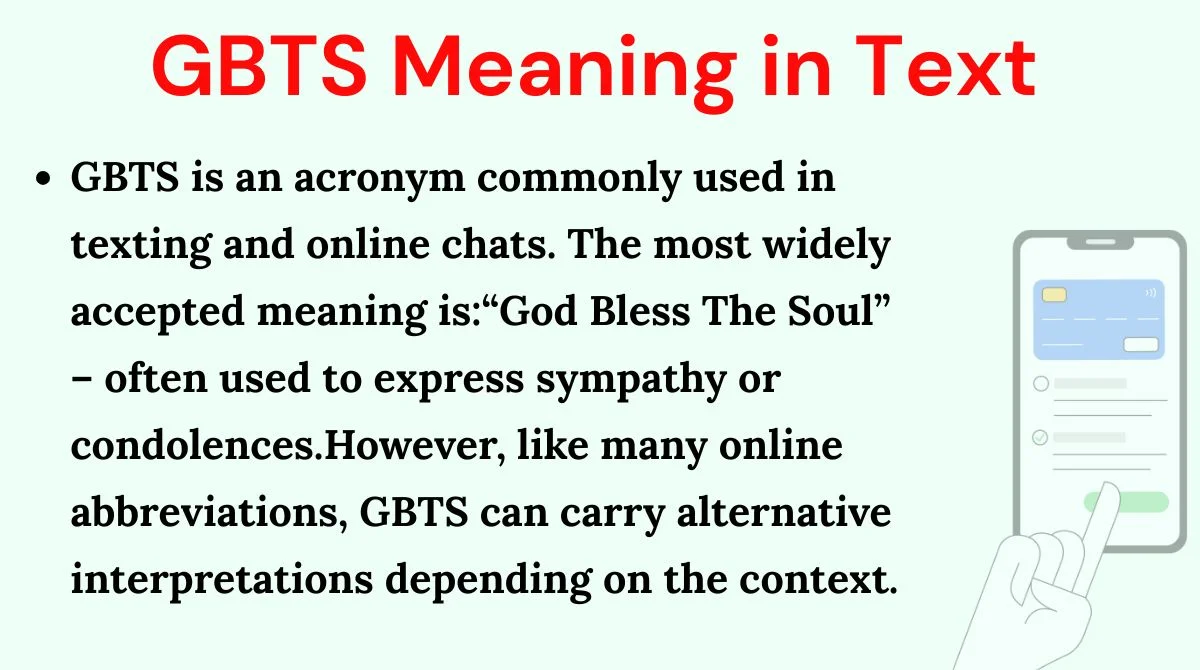
GBTS is an acronym commonly used in texting and online chats. The most widely accepted meaning is:“God Bless The Soul” – often used to express sympathy or condolences.However, like many online abbreviations, GBTS can carry alternative interpretations depending on the context.
For instance, among friends or casual chats, it might take on a humorous or ironic tone, but its core meaning is usually related to expressing respect or condolences.
Using acronyms like GBTS helps keep messages short, especially in fast messaging platforms, while still conveying emotion and intent.
Full Form, Stands For & Short Meaning of GBTS
- Full Form: God Bless The Soul
- Stands For: An expression of sympathy, reverence, or respect
- Short Meaning: A way to show compassion or honor someone who has passed away
Other variations may appear in niche communities, but these are the primary meanings recognized across most chat platforms.
Origin, History & First Known Use of GBTS
GBTS likely emerged in online chatrooms, forums, and early messaging apps in the mid-2000s, when shorthand expressions became popular.
Its religious undertone suggests a historical connection to phrases like “Rest in Peace” (RIP), adapted for modern texting culture.
Over time, GBTS spread across social media platforms, particularly where users prefer quick, typed expressions of sentiment.
How People Use GBTS in Daily Conversations
People generally use GBTS in messages or posts where a life event, loss, or emotional moment is discussed. For example:
- “I just heard about her passing… GBTS 💔”
- “He was a kind person. GBTS 🙏”
- “GBTS, may their memories live on 🌹”
It’s often accompanied by emojis to convey emotion without words. Using GBTS in casual texts requires sensitivity because of its association with condolences.
GBTS Meaning Across WhatsApp, Instagram, TikTok & Snapchat
- WhatsApp: Commonly used in group chats when sharing sad news or remembering someone
- Instagram: Appears in captions or comments to express sympathy publicly
- TikTok: Can be used in video captions or trending sound contexts to show respect or for emotional content
- Snapchat: Often in snaps or chat messages when commenting on friends’ stories
Across platforms, its tone can shift slightly depending on the audience but usually remains respectful.
Different Meanings of GBTS in Other Fields
While GBTS primarily relates to condolences in texting, acronyms can differ by field:
- Gaming Communities: Rarely, GBTS could be humorously used as “Gotta Beat This Stage”
- Corporate/Tech: Not commonly used but may appear as internal shorthand or nicknames
Context is key—always consider the audience before using abbreviations.
Common Confusions, Mistakes & Wrong Interpretations
- Mistaking GBTS for unrelated slang like “Get Back To School”
- Misusing it in casual jokes, which could offend someone
- Assuming it’s a generic positive greeting instead of a condolence
To avoid confusion, check the conversation context before using GBTS.
Similar Terms, Alternatives & Related Slang
- RIP – Rest in Peace
- RIP in Peace – Redundant, but sometimes jokingly used
- Condolences – Formal alternative
- God Bless – Shortened, less specific version
These can be used interchangeably depending on tone and platform.
Examples of GBTS in Real Chat Situations
- Friend 1: “Did you hear about Mr. Smith?”
- Friend 2: “Yeah… GBTS 😢”
- Commenting on a post: “She was amazing. GBTS 🙏”
- Sharing news: “Sad to hear this happened. GBTS 💔”
How to Reply When Someone Says GBTS
- “Thank you 💕”
- “🙏🙏 Rest in peace”
- “Indeed, may they rest peacefully 🌹”
Responses should match the sentiment and tone of the original message.
Is GBTS Still Popular? Trends & Online Usage
GBTS maintains moderate popularity, mainly in empathetic conversations. It’s not trending like TikTok-specific slang, but its usage remains stable in WhatsApp, Facebook, and Instagram communities.
Its relevance depends on cultural and generational contexts, often used more by older teens and adults rather than younger Gen Z users.
FAQs (What People Also Ask)
- What does GBTS mean in texting?
GBTS means “God Bless The Soul” and is used to express condolences. - Is GBTS the same as RIP?
Yes, it’s similar in meaning but often used in chat or text form. - Can GBTS be used casually?
Not really—it’s best reserved for respectful or emotional contexts. - Where did GBTS come from?
It originated in early online chatrooms and messaging apps. - Are there alternative phrases to GBTS?
Yes, RIP, God Bless, and condolences are commonly used alternatives.
Conclusion
Understanding abbreviations like GBTS is essential in the modern world of texting and social media. While it primarily means “God Bless The Soul,” its usage can vary slightly depending on context and platform.
Knowing the origin, correct situations to use it, and alternative phrases ensures that you communicate respectfully and clearly.
Whether you see it on WhatsApp, Instagram, or TikTok, GBTS remains a meaningful way to express sympathy or honor someone’s memory.
By using it thoughtfully, you show empathy while staying in tune with digital communication trends.
Next time you encounter GBTS in a chat, you’ll know exactly how to interpret it and respond appropriately.
Remember, context matters, and a simple emoji can enhance your message without words.