
In today’s fast-paced digital world, abbreviations and slang dominate online conversations. One term you might have stumbled upon is IMAO.
Many people search for it, wondering what it really means and how to respond when someone types it in a chat.
Unlike more common terms like LOL or BRB, IMAO is less familiar but still pops up on messaging apps and social media platforms.
Understanding these abbreviations is not just about keeping up with trends—it also helps in avoiding misunderstandings and communicating more effectively online.
This guide will break down IMAO meaning in text, explore its origins, and provide practical examples for daily conversations.
What Does IMAO Mean in Text & Chat?
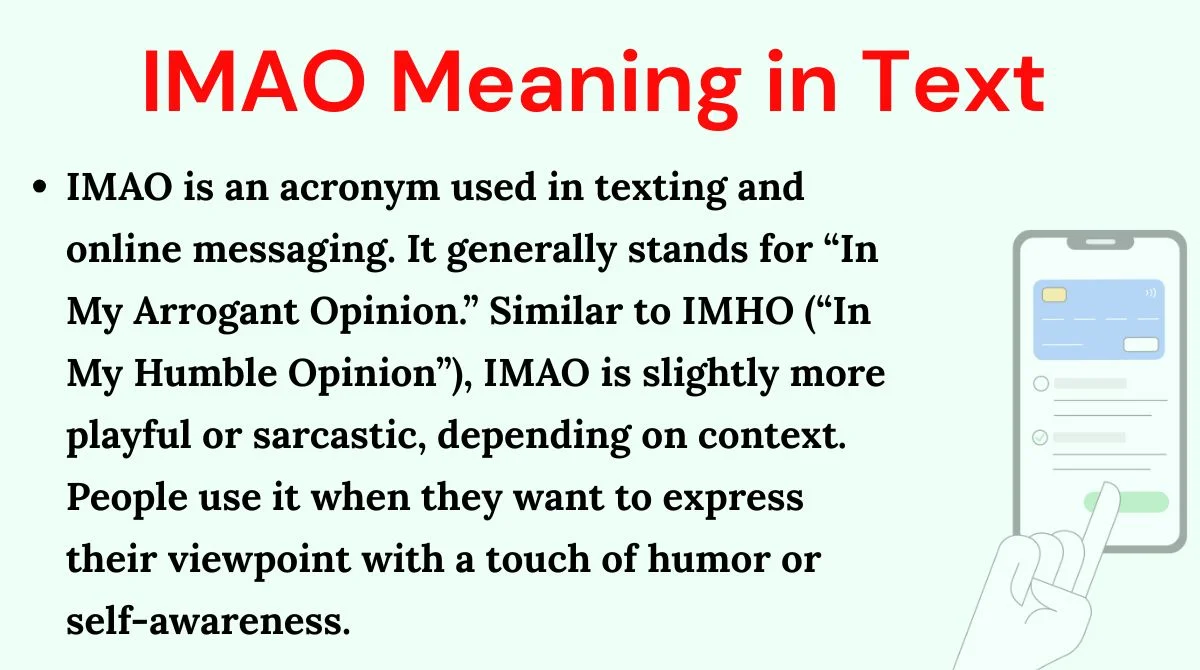
IMAO is an acronym used in texting and online messaging. It generally stands for “In My Arrogant Opinion.” Similar to IMHO (“In My Humble Opinion”), IMAO is slightly more playful or sarcastic, depending on context. People use it when they want to express their viewpoint with a touch of humor or self-awareness.
For example:
- “IMAO, pineapple on pizza is the best! 🍍🍕”
- “IMAO, cats are secretly plotting to take over the world 😼”
It’s often used in casual conversations where tone matters, and it helps signal that the statement is personal and possibly exaggerated.
Full Form, Stands For & Short Meaning of IMAO
- Full Form: In My Arrogant Opinion
- Short Meaning: A personal, slightly cheeky opinion
- Synonyms: IMHO, IMO (In My Opinion)
IMAO conveys confidence, humor, or mild sarcasm. Unlike IMHO, which is polite, IMAO can sound cheeky or self-assured.
Using it effectively depends on your audience; friends familiar with internet slang are more likely to understand it.
Origin, History & First Known Use of IMAO
IMAO emerged as internet slang in online forums and chat rooms in the early 2000s. It was inspired by IMHO, a widely recognized phrase used on platforms like IRC (Internet Relay Chat) and early social media boards.
While IMHO expresses humility, IMAO flips the tone, adding a playful arrogance. Over time, IMAO spread across messaging platforms like WhatsApp, Facebook Messenger, and Instagram.
How People Use IMAO in Daily Conversations
People use IMAO to:
- Lightly joke about their opinions
- Add personality or humor to a statement
- Signal that their statement is subjective
- Tease or playfully exaggerate
Quick examples:
- “IMAO, your dog could be a superhero in disguise 🐕🦺”
- “IMAO, Monday mornings should be illegal 😴”
It’s casual, so it’s rarely used in formal or professional settings.
IMAO Meaning Across WhatsApp, Instagram, TikTok & Snapchat
IMAO is common in:
- WhatsApp: Group chats, funny memes, quick replies
- Instagram: Captions or comment sections for humor
- TikTok: Video captions or trends where people share opinions
- Snapchat: Snaps or chat messages with friends
On all these platforms, context and emoji usage can change its tone, making it playful, sarcastic, or just lighthearted.
Different Meanings of IMAO in Other Fields
While IMAO is mostly slang, it can occasionally appear in other contexts, like:
- Medical: Rarely, IMAO might be confused with MAO inhibitors (irrelevant in texting)
- Business or informal abbreviations: Could be mistaken for typos or acronyms in technical writing
However, in general digital communication, IMAO almost always means “In My Arrogant Opinion.”
Common Confusions, Mistakes & Wrong Interpretations
- Confusing IMAO with LMAO: LMAO = “Laughing My Ass Off,” unrelated to opinions.
- Typing errors: Sometimes people type IMHO but accidentally write IMAO.
- Misreading tone: Without context, IMAO may seem rude rather than humorous.
Tip: Pay attention to the surrounding text and emojis to interpret it correctly.
Similar Terms, Alternatives & Related Slang
- IMHO: In My Humble Opinion (polite)
- IMO: In My Opinion (neutral)
- TBH: To Be Honest (can express opinion)
- LMAO: For laughter, not opinion
These terms are widely recognized across chat apps and social media.
Examples of IMAO in Real Chat Situations
- Friend 1: “The new superhero movie was overrated 😒”
- Friend 2: “IMAO, it was epic! Best one in years 💥”
- Online forum:
- User 1: “Pineapple doesn’t belong on pizza”
- User 2: “IMAO, it’s a culinary masterpiece 🍕”
How to Reply When Someone Says IMAO
Responses depend on tone:
- Playful: “😂 Totally agree!”
- Curious: “IMAO? Didn’t expect that opinion!”
- Agreeing: “Same here 😎”
- Disagreeing lightly: “IMAO, I’d say it’s the worst ever 😅”
Is IMAO Still Popular? Trends & Online Usage
IMAO is less common than IMHO or LMAO but still pops up among younger audiences and meme communities.
It’s more niche and humorous, often used for emphasis or comedic exaggeration. Emojis and GIFs enhance its playful tone.
FAQs
1. Is IMAO the same as LMAO?
No. LMAO means “Laughing My Ass Off,” while IMAO means “In My Arrogant Opinion.”
2. Can I use IMAO professionally?
Not recommended. It’s casual and playful, best for friends or online communities.
3. What is the difference between IMHO and IMAO?
IMHO is humble; IMAO is confident and slightly cheeky.
4. Is IMAO still used on social media?
Yes, mostly on platforms like TikTok, Instagram, and WhatsApp groups.
5. How should I reply to IMAO?
Use emojis or playful language to match the tone of the original message.
Conclusion
IMAO is a fun, cheeky way to share opinions online, adding personality and humor to digital conversations. While less common than IMHO or LMAO, it’s recognized among meme-savvy and social media users.
Understanding its meaning prevents miscommunication and helps you respond appropriately in chats, captions, and online forums.
Whether you’re using it to make a point, joke with friends, or emphasize your personality, IMAO adds a playful edge to your text game.
Keep an eye on tone, use emojis to clarify humor, and enjoy expressing your arrogant opinions online!