
In today’s fast-paced digital world, texting has become one of the most common ways to communicate.
iPhone users, in particular, often come across abbreviations, slang, or emojis that leave them wondering about the meaning in iPhone texts.
Whether it’s a casual “LOL” or a cryptic acronym, understanding these messages is essential to avoid miscommunication.
Many people search for the meaning in iPhone texts to stay connected, decode hidden tones, or just avoid sending awkward replies.
This guide will break down popular terms, explain their origins, and show you how to use them confidently in everyday conversations.
By the end, you’ll be texting like a pro without second-guessing what someone really means.
What Does [WORD] Mean in Text & Chat?
When you receive a text on your iPhone with a term you don’t recognize, the first step is to know its basic meaning in text and chat.
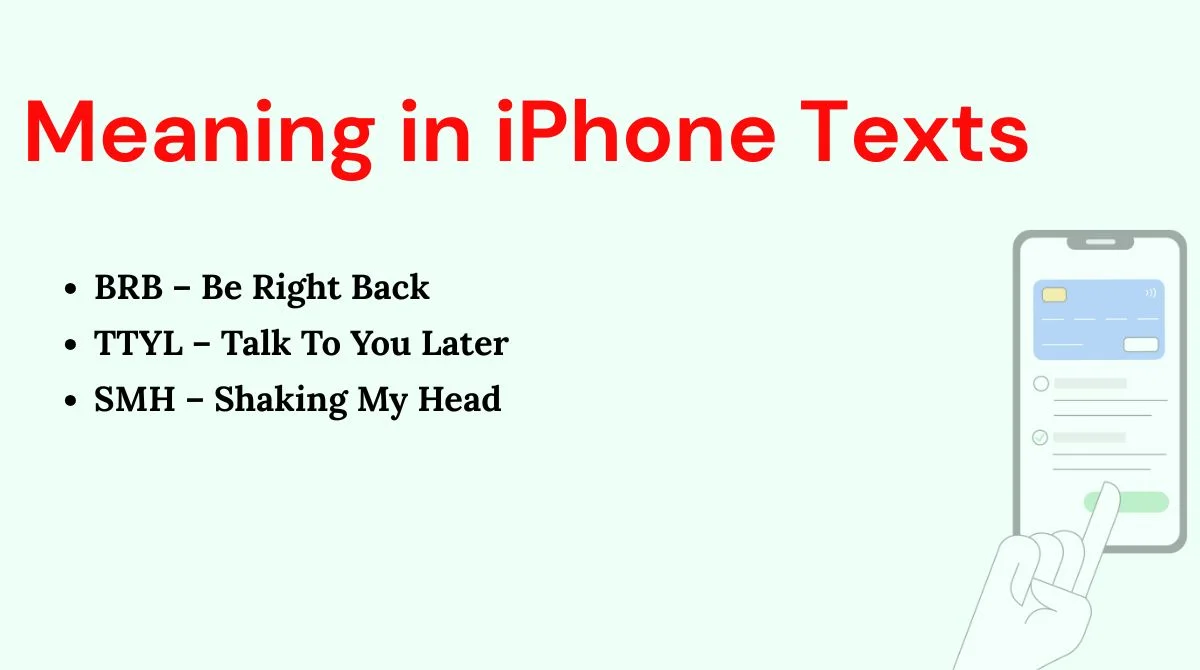
Often, these words or abbreviations are shorthand for longer phrases, emotions, or reactions. For example:
- BRB – Be Right Back
- TTYL – Talk To You Later
- SMH – Shaking My Head
These shorthand terms save time and convey emotion efficiently, especially in fast conversations.
iPhone texts may also include emojis that act as “text modifiers,” adding tone or humor to the message.
Understanding these terms prevents misunderstandings and makes your texting smoother.
Full Form, Stands For & Short Meaning of [WORD]
Every abbreviation or slang term in iPhone texts has a full form or short meaning. For instance:
- ICYMI – In Case You Missed It
- FOMO – Fear Of Missing Out
- IDK – I Don’t Know
Knowing the full form helps you respond appropriately. In addition, some words may have multiple meanings depending on context. This section acts as a quick reference for anyone puzzled by common iPhone text lingo.
Origin, History & First Known Use of [WORD]
Most texting abbreviations originated in the early days of SMS (Short Message Service) when messages were limited to 160 characters.
Users wanted to communicate faster, leading to shortcuts like LOL (Laugh Out Loud) in the 1980s and BRB in the 1990s.
Over time, these abbreviations spread to iPhones, WhatsApp, and social media platforms. Knowing the history of text terms can give you insight into why they became so popular and how their meanings have evolved over decades.
How People Use [WORD] in Daily Conversations
In everyday chats, iPhone users incorporate these abbreviations casually:
- Friend: “BRB, grabbing coffee ☕”
- You: “No worries!”
- Colleague: “IDK if the meeting is still on 🤔”
- You: “I’ll check and let you know.”
These terms are especially useful for informal conversations, group chats, and social media messages. They make communication faster and often add personality to texts.
[WORD] Meaning Across WhatsApp, Instagram, TikTok & Snapchat
The same text abbreviation or slang may carry slightly different meanings across platforms:
- Snapchat: Often more casual, playful, or emoji-heavy
- Instagram: Can trend as hashtags or captions
- TikTok: Sometimes linked to memes or trending phrases
- WhatsApp: Common for group updates or everyday chat
Understanding platform-specific usage prevents awkward misunderstandings and keeps your messages relevant.
Different Meanings of [WORD] in Other Fields
Some terms have alternative meanings in professional or academic contexts:
- LOL: Can mean “Lots of Love” in emails
- FOMO: Used in marketing to describe consumer behavior
- SMH: Occasionally used sarcastically in journalism or blogs
Being aware of these nuances helps avoid confusion when texting across different settings.
Common Confusions, Mistakes & Wrong Interpretations
It’s easy to misinterpret abbreviations:
- TTYL is sometimes mistaken for a dismissive “I don’t care”
- ROFL may be used sarcastically
- Emoji tone can change meaning drastically
Always consider the context and your relationship with the sender. A simple check before replying can save embarrassment.
Similar Terms, Alternatives & Related Slang
Texting slang constantly evolves. Some similar or alternative terms include:
- BTW → By The Way
- OMG → Oh My God
- NVM → Never Mind
Learning related slang broadens your texting vocabulary and keeps you up-to-date with trends.
Examples of [WORD] in Real Chat Situations
- Friend: “Can’t believe you missed the concert 😱”
- You: “IKR, I was stuck at work 😩”
- Colleague: “IDK if we can finish the project by Friday”
- You: “Let’s try our best! 💪”
These examples show practical usage of abbreviations, making texting more natural.
How to Reply When Someone Says [WORD]
When someone uses shorthand in a message:
- Acknowledge: Show understanding (“Got it ✅”)
- Respond appropriately: Mirror their tone or slang
- Ask if unsure: “What does X mean?” is fine for clarity
Being confident in your reply ensures smooth communication and avoids misunderstandings.
Is [WORD] Still Popular? Trends & Online Usage
Texting slang evolves, and some abbreviations become outdated. Platforms like TikTok and Instagram frequently introduce new trends, while classics like LOL or BRB remain widely recognized. Staying updated ensures your messages resonate with friends and followers.
FAQs
1. What does “IDK” mean in iPhone texts?
It stands for “I Don’t Know” and is used to express uncertainty.
2. Is “LOL” still commonly used today?
Yes, it remains one of the most popular text abbreviations globally.
3. Can emojis change the meaning of text slang?
Absolutely! A 😅 or 😡 can completely alter the tone.
4. Are texting abbreviations the same on all platforms?
Not always. Some platforms use slang differently depending on trends.
5. How can I learn new texting terms quickly?
Follow social media trends, online slang dictionaries, or chat with younger friends.
Conclusion
Understanding the meaning in iPhone texts is more than just decoding abbreviations—it’s about connecting effectively, avoiding misunderstandings, and keeping up with modern communication trends.
Whether it’s a quick “BRB,” a sarcastic “SMH,” or a trending TikTok abbreviation, knowing these terms helps you text confidently across platforms.
By keeping this guide handy, you’ll never be puzzled by a mysterious message again, and your digital conversations will stay smooth, clear, and fun.